The Rector’s Annual Meeting Address
I begin with a personal note.
I am so grateful for all of you. Last night Ann and I were talking about just how amazing you all are . . . every one of you. So let me begin by saying thank you.
As you are aware, this has been a difficult several years for the Paddock family as our daughter Jessye lives more deeply into the grip of an unrelenting disease that goes by the name of Mixed Connective Tissue Disorder. Your prayers, concern, understanding, and support help to sustain us as we walk through this dark valley. Thank you.
And now to other matters.
So much in our lives is focused on numbers. Statistics tell us how we’re doing in so many areas of life: unemployment, healthcare, energy consumption and so on. The state of the economy is measured by Dow Jones, Nasdeq, S&P 500.
This is true for the Church as well. We measure membership, ASA (Average Sunday Attendance), number of services, baptisms, confirmations, income, expenses. We compare the numbers year-by-year and we track the trends. That’s important work and, on one level, it’s good to know where we stand.
You’ve heard the reports. You know that income is down – expenses are up – your staff’s salaries are stagnant – total pledge numbers and amounts are declining. It’s hardly any comfort to know that what we’re experiencing is happening all around this country – even in many of the mega-churches.
It is very easy – watching the decline in the numbers – to fear that we’re dying – that Christ Church, Dayton, is on the slippery slope and that the end is inevitable. We might fear that God’s work in this place is finished.
Speaking of numbers, I know that the Book of Numbers (the 4th book in the Old Testament) I know that it may not be high on your reading list, but there’s a story in chapters 13 and 14 that’s instructive. The Hebrews had escaped from Egypt and were wandering around in the wilderness of Sinai.
Wanting to know what was ahead as they prepared to enter the Promised Land, Moses selected 12 men—one from each of the 12 tribes—to spy out the land of Canaan. And off they went—for 40 days. (There are those numbers again—12 and 40). When they returned they reported to Moses and Aaron and to all the congregation of Israel that the land was indeed flowing with milk and honey and abundant fruit. Two of the spies, Joshua and Caleb, wanted to organize the people to go at once and occupy the land that God had promised them.
But 10 of the 12 spies said: ‘We’re not able to go up against this people, for they’re stronger than we are.’ So they brought to the Israelites an unfavorable report of the land that they had spied out, saying, ‘The land that we have gone through as spies is a land that devours its inhabitants; and all the people that we saw in it are of great size.”
Then all the congregation raised a loud cry, and the people wept that night.” And they demanded that they find a captain to lead them back to Egypt. They lost their faith that God would be with them; and they continued to wander in the wilderness for another generation.
We, too, have a choice. We can choose to believe that the glory days of Christ Church are in the past when the numbers were better, and that the future will eventually devour us. This is the way of death. For you see, if our vision of life has no compelling vision greater than death, then that is the end. If we believe that no one is interested in the Gospel and the Church, if we believe that people are too difficult to reach, then we limit God ourselves.
Or we can choose to believe that God is still out in front of us, leading us into a future that belongs to him.
Look at the end of Jesus’ own life. Peter denied him, Judas betrayed him, all but one of the 12 ran away. Only John and Jesus’s mother were reported to have been at the foot of the cross. And yet . . . the future was his.
We have many challenges as we nurse along this old Great Lady of First Street. We are still exploring how much of a Capital Campaign to enter into. How long can we reasonably expect to keep her going? Your new Vestry will have to face some of those questions very soon. But God’s work in this city is not done!
As you’ve heard here today, the Trustees of our Endowment have found a way to shore up our finances in a way that allows us time to rethink past assumptions and practices as we discern what God is calling us to do as we go forward . . . perhaps leaner . . . but smarter and wiser.
In the past few months we have recast the vision for our life together:
The vision of Christ Church is to become an inclusive community that reflects, embraces, and responds to the mystery and challenges of the human condition, in the name of Jesus.
And we have refined our mission:
Christ Church is called to love and serve God, giving of ourselves as we worship, wrestle with questions of faith and nurture the Christ in all people: the friend and the stranger, the satisfied and the needy, the believer and the unbeliever.
We have a lively group that is working on a new strategic plan with measurable goals for each of the next three years in the areas of worship, community life, outreach and mission, Christian education, and Evangelism. Yes, you heard that right. Evangelism!
We have a story to tell. We have personal stories about how our lives have meaning as a result of our faith and our participation in this community. We also have great stories to share about this extraordinary Christ Church, Dayton, and the saints we have known in the past who’ve inspired us—as well as the saints we still know and associate with on a regular basis.
Do you know how evangelism works? Here are the numbers (More numbers!) Here are ways that people come to join churches.
- • Meeting special needs (community outreach, counseling, performing weddings etc) 2-5%
- • Walk-ins 2-5%
- • Pastor Attracts Newcomers 2-5%
- • Visitation (everything from knocking on doors to cold-calling in hospitals and hanging out at community centers and events) 2-5%
- • Sunday School 2-5%
- • Evangelistic Series (tent meetings or weeklong preaching series) 2-5%
- • Invitation from friends or relatives 75-95%
The Mormons have found that those 2 guys in white shirts, going around knocking on doors, they get 1 person for every 1000 visited (0.1%). So they’ve changed tactics. They still knock on doors. But they spend more time making friends. Because 50% of their friends eventually join the church.
One of our goals for this year is to work together on our stories so that when we get a chance to share with family and friends, we’ll be prepared to tell our stories and to invite them to come to church.
Here is an affirmation of faith for our time and for the challenges we face:
We believe in God,
maker and re-maker of everything that is,
in whom there is always more,
and more to come;
and by whose wonder, work, and will,
even the dead find life.
We believe in God.
We believe in Jesus Christ,
maker and re-maker of tables and tales,
in whom the welcome is wide,
the feasting free;
and by whose weeping, words, and wounds,
even the lost are found.
We believe in Jesus Christ.
We believe in the Holy Spirit,
maker and re-maker of imagination,
whose eyes see over the horizon,
beyond the end;
and by whose urgency and fire,
even the truth gets told.
We believe in the Holy Spirit.
Therefore, we also believe
that everything that lives can be reborn,
all hidden things can come to light,
all broken things can be remade,
the empty larder can be filled,
and promises gone stale and hard
can taste like bread again.
And we believe the old, old Story can be told again
to thrill sad hearts like rediscovered love;
that even lost and frightened lambs like us
can be retrieved, restored to courage,
and declare the Truth
that makes the tyrants tumble
and the captives free. (From the blog “Sicut Locutus Est,” An Affirmation of Faith (Trinitarian)
Bishop Carey of North Carolina has said: “If there is a vision of life saturated with love, if there is a vision where there is room for all of us, if there is a vision of life that is good and beautiful, if there is a vision of life – then life can be lived. It is that vision of life, that dream of God, that kingdom of God, that new heaven, that new earth, that has the power to lift us up from the mire and the muck and say, ‘Glory, hallelujah!’”
I am grateful to be one of your priests, and I look forward to discovering the wonders that God has in store for us in the years to come.
Introducing LindaMay Watkins
On the First Sunday of Advent, LindaMay Watkins officially began working with Christ Church as her fieldwork placement. Although I introduced her several times during worship, in the busyness of the holidays I realize that I did not do so in any formal way. I apologize to LindaMay and to you. Let me make amends by telling you a bit about her.
LindaMay is in the second of a three-year program to become a deacon. The deacon training students meet online for class on Thursday evenings. They also gather at Procter Conference Center for one weekend a month.
For her fieldwork she will be worshipping with us on Sundays, participating as a layperson (Eucharistic Minister and Lector), preaching twice this winter and spring, and working occasionally with our outreach ministries, particularly CityHeart. Although it is assumed that she will be with us during the next academic year as well, the present arrangement with the Diocese of Southern Ohio is through early June, 2014.
LindaMay lives in Hamilton, Ohio, where she earns her living by helping to manage several properties. She was formerly married and has five adult children and several grandchildren who all live in the greater Cincinnati area.
LindaMay’s religious background is Pentecostal. Her faith is deep and lively. She has some things to teach us about evangelism and discipleship.
Her home parish is The Church of Our Savior, Cincinnati, where Mother Paula Jackson is rector. Paula and I have been active together in the national clergy group “The Church in Metropolitan Areas” with a focus on urban ministry. At Our Savior LindaMay was active in “street church” and in community life. Ask her about “street Church”.
If you haven’t already, please introduce yourself to LindaMay and give her a warm Christ Church welcome.
–The Rev. John Paddock
Carson and Christmas
This past Thursday morning Carson Dwight died. Carson was the daughter of Bob and Rose Dwight and the mother of Cameron Roberts and Tiana Dwight.
Carson’s passage through this life was rough. She struggled with more demons than anyone ever deserves. Many of her relationships were troubled, which means that the grief itself is intense and complicated.
Coming just six days before Christmas, Carson’s death injects an especially harsh note into our holiday season. Any death of a loved one at this time of year can forever color the holidays blue. Many churches conduct “Blue Christmas” services for those for whom the season isn’t filled with peace and deep joy—but rather grief, depression, anger, resentment, or loneliness.
I write this reflection in the knowledge that Carson’s passing is not just a personal, private, or familial loss. Bob, Rose, Cameron, and Tiana are such a part of Christ Episcopal Church that this is a public grief because we love them so.
Of course, we often gloss over the darker elements of the Christmas stories that are in both St. Matthew’s and St. Luke’s telling: dislocation in the late stages of pregnancy, no room in the inn, the babe laid in the feeding trough for cows, slaughter of the Holy Innocents of Bethlehem, escape of the Holy Family into Egypt as refugees, uncertainty on Joseph’s part about the father of his son.
So on the one hand, the expectation of deep peace and great joy just doesn’t meet the reality of the situation. This year, as in every year, unmitigated cheer can only come if we ignore the tremendous human tragedies all around us.
On the other hand, the angelic proclamation of great joy and peace on earth came in the middle of all that darkness and still comes to us. St. John says in his version of the Christmas story, “The light was coming into the world and the darkness did not overcome it.”
To the Dwight’s and all of their family and friends, we extend our condolences and proclaim our love for them. And to everyone we affirm the Good News that God dwells with us, among us, is one of us—in all the messiness, grief, and ambiguity of the human experience.
Phillips Brooks, Episcopal Bishop of Massachusetts in the late 1800’s, wrote a poem that put it so well:
Yet in thy dark streets shineth
The everlasting light.
The hopes and fears of all the years
Are met in thee tonight . . . .
We hear the Christmas angels
The great glad tidings tell
O come to us, abide with us
Our Lord Emmanuel.
–John Paddock
Rod Kennedy’s Reflection at Mandela Memorial
A Tribute to Nelson Mandela
Dr. Rodney Wallace Kennedy
Lead pastor
First Baptist Church Dayton
December 12, 2013
Oppressors, from Pharaoh to Jim Crow are obsessive compulsive, oppositional
defiant, and deficient in vocabulary. They never ever understand words like
“freedom,” “justice,” “human rights,” and “dignity.” Oppressors are also
hard of hearing. For example, “Let my people go.” The lesson has to be
repeated and repeated. “Let” is hard on the powers and principalities who
are interested not in “letting” but in taking, denying, discriminating,
destroying, diminishing, persecuting, killing, and etc. Oppressors are
never interested in letting go but in imprisoning, impaling, impoverishing.
There is never an end to those willing to take the role of oppressor and for
that reason there must always be those courageous ones willing to stand
against the oppressors. An early Baptist, Thomas Helwys, told King James
that no king had power over the conscience of another person.
Yet oppressors think they own people, have hereditary rights to oppress
people, but soon or late, the cry of the people, is heard by God and God
calls people like us into action. I must say that whenever I show up at a
meeting in this city that deals with justice, John Paddock is always there
and it is an honor to stand next to John in the struggle for justice. He is
my brother and my friend and justice is our common cause.
Justice requires of us a constant vigil. The powers and the principalities
will devalue human life and creation at any given moment in time. We gather
here in this sacred place to lend our voices to support a real life hero of
the real life Justice League. We do so to encourage ourselves to keep
fighting for justice wherever and whenever injustice rears its ugly head
against another race, against women, against children, against gays and
lesbians, against the poor, and against those who put profits over persons,
rules over relationships, and greed over generosity.
It was my thought that the best words to honor President Mandela were first
uttered by the Great Emancipator after Gettysburg and so to the Great
Liberator I offer these words of tribute and encouragement.
Ninety-five years ago Nelson Mandela was born, and in his lifetime he was
dedicated to the proposition that all persons are created equal. He gave
his life to the pursuit of justice for his people in South Africa. In a
land where the majority cried, “Apartheid today, apartheid tomorrow,
apartheid forever,” Mandela said “Apartheid never!”
Now we are engaged in a great war for justice, testing whether any nation
can long endure when some are less free than others. We are met to honor one
of the heroes of that forever-long war. We have come to acknowledge the
victory of Nelson Mandela over apartheid so that his nation might always
live in freedom, and our world be free of the scourge of discrimination. It
is altogether fitting and proper that we should do this.
But, in a larger sense, we cannot rest in peace or consider our work done.
This one brave man, struggled a lifetime, much of it in prison, and we must
now make his contribution live forever by adding our lives to the struggle
for justice. The world will ignore what we say here, but it can never
forget what President Mandela did. Away from the spotlight of media and
political power, we bend our knees and lift our heart to dedicate ourselves
to the unfinished work of justice thus far so nobly advanced. It is rather
for us to be here dedicated to the great task remaining before us – that
from President Mandela we take increased devotion to that cause for which he
gave the full measure of devotion – that we here highly resolve that hero
shall not have died in vain – that the people of God, with renewed vigor,
with constant diligence, with unrelenting courage shall not rest in ease
until justice rolls down like waters, and righteousness like an ever-flowing
stream.
Reflection at Service for Nelson Mandela
Nathan Baxter, Episcopal Bishop of Central Pennsylvania, recently said, “My wife and I have made pilgrimages to South Africa and visited Robben Island. I must admit that I find it mind boggling to believe one could spend decades in such conditions and be formed for grace. Yet, a profound theological truth is that nothing is wasted in God’s economy if we surrender it to God’s grace.
Archbishop Desmond Tutu has famously said of his friend, Nelson Mandela, “….suffering can do one of two things to a person. It can make you bitter and hard and really resentful of things. Or as it seems to do with very many people–it is like fires of adversity that toughen someone. They make you strong but paradoxically also they make you compassionate, and gentle. I think that that is what happened to him.”
It is this I want us to hold in our minds and hearts today.
How far too often “an eye for an eye” is the standard by which the world operates. None other than Mahatma Gandhi remarked, “An eye for an eye will only make the whole world blind.”
Revenge for past injury and suffering pervades our courts, our streets, our politics, and most certainly our international relations. What a travesty that at the memorial the other day for a man who demonstrated one can and did forgive his enemies, it feels at times like Mandela’s soul was absent.
How can we ever forgive and reconcile when the President of the United States can’t even politely shake the hand of Raoul Castro with creating a political firestorm!
As we all know, and constantly need reminding, standing up for truth and justice and the dignity of every human being has a cost. A cross, a bullet, a hangman’s noose, public ridicule. At a very basic personal level . . . it also means letting loose of our pain and anger, our suffering.
This is the season of Advent wherein we hear the voice of John the Baptist calling on everyone to repent. “Repent, for the time is a hand.” Repent means to turn around and go in a different direction. Most certainly we need to turn away from self-righteous anger and behave differently than the way of vengeance.
But repent also has another meaning. The second meaning of repent . . . to enlarge your heart.
We who serve in the heart of this city and witness to this community are grateful for one like Nelson Mandela whose life’s testimony is that it really is possible, by God’s grace, to turn around—and to do so with a heart that’s large enough to embrace the very ones who broke it in the first place.
When the days are dark, when injustice, indifference and oppression rule the day, when revenge is the way of the world . . . it too easy to lose heart. Mandiba reminds us, “It always seems impossible until it’s done.”
–John Paddock
Addressing The Reading Crisis
There is a reading crisis among school children in the Dayton region. It is bad in Dayton, but it reaches every community and school district. Learn to Earn is a collaborative effort in the community that involves businesses, schools, universities, faith communities and others to work together to address the crisis.
The primary focus of education from kindergarten through third grade is on learning to read. After that students “read to learn” as they expand into other subjects. Far too many third graders cannot meet the third grade reading standards, which means that they will begin to fall behind at a rapid rate. New this year in Ohio is the requirement that all students who cannot meet the third grade reading standards will be retained.
There are many reasons why children do not learn to read proficiently. However, research indicates that there are three primary factors:
- Not kindergarten ready—too many students begin their school careers who have rarely, if ever, been read to or had other experiences to peak their curiosity and interest in learning.
- Tardiness and absenteeism.
- The summer slide. This is especially acute among children of poverty who have few age appropriate reading materials to keep up their newly learned skills over the long summer breaks.
Some of our people tutor and mentor students at various grade levels, and that is wonderful. If you are presently tutoring or mentoring, please let me know where and how often so that we can have a better idea of what our people are doing in the community. But not everyone has the time or skill it takes to do that important work.
Many more of us can provide a book. If you have children’s books that you would be able to donate, bring them to the church. You might consider buying a new or used book on a monthly basis. Pre-school through third grade children’s books are the materials most needed. But we will accept books for older children as well.
Through CityHeart and other programs the church will distribute the books to parents and grandparents. In this way we can join with hundreds of others of good will in improving educational outcomes for vulnerable children.
–John Paddock
The Least
The Least
Sara is thirty years old. She sits in a wheelchair or on the floor or on a couch. She cannot speak, but sometimes she is very noisy; she smiles or howls, cries or emits a deep guttural laugh. She has the body of a small woman with hips and breasts, but she cannot walk or talk or use her body in any way other than to perform the most basic human actions of eating, sleeping, sneezing, drooling, and other functions of existence. When she eats, she smears her food on her face and grabs at the items she likes. She likes to play with chains of colored beads and to throw them on the floor so that someone will have to pick them up. Her arms are the most mobile parts of her body and she uses them actively to wave her beads around, or just to flail at an incomprehensible world. Sometimes she becomes ill and seems to be failing, but her little body is strong and she recovers. She cries out in pain sometimes and no one knows why. Other times she crosses her skinny legs with their knee high stockings and sits defiantly looking out at the world. Her clothes and her body are clean; she is well groomed, well fed and well cared for. Sara understands such simple commands as “no,” “yes,”, “wait,” and has emotional attachments to her family and some few others. She likes hugs and kisses. She avoids eye contact, but she will sometimes glare at people who approach her and other times she will grab someone’s hand, smile and seemingly attach herself to that person. A minute later, she drops the hand and looks elsewhere. Her greatest joy seems to be music. When she hears the organ or the voices of the choir, when music is played at home, especially when it is lively and fast, her whole body responds to the rhythms and the pounding beat and her face glows.
Sara was born in 1983. Soon after, she was diagnosed as microcephalic. She will never get better. She is just herself, Sara. Her mother left her professional career and became and has remained Sara’s primary caretaker. Her father helps with caretaking, lifts Sara in and out of the car, sits with her, talks to her, holds her hand and loves her. Her brother and sisters grew up with Sara and appear to have unremitting love for her. They are purposely involved in her care. Although there are respite care and other support services for Sara, there is little other relief for the family. Sara’s mother says that Sara makes her family better. She says she, her husband and the other children are better because of Sara. An uninvolved observer can see that the family always deals with Sara lovingly and that it is good for children to care for one another. The observer wonders.
Why?
Why does Sara exist? She cannot learn or work or contribute to society. She is a drain on the economy and on the health care system. She has no apparent usefulness to anyone. She takes up space. Providing for her is not cost-effective. She has depleted her family’s resources for thirty years and has deprived her sibs of time and love that their parents could have devoted to them. She is not a productive member of society. She has nothing to offer. She is a waste of time. Her family must have some hidden deep resentment toward her.
Last year Sara was very sick and possibly near death. Some observers sighed and said it would be a blessing for her to go. Her family was distraught, sleepless with anxiety, and feared that they would lose Sara. When she recovered, they rejoiced and led her proudly down the aisle at church to her accustomed place in the third row, right side. Sara was back and we all were relieved and happy.
Why?
Sara has been a member of Christ Episcopal Church since 1992. Everyone observes her and accepts her and loves her, but asks the inevitable questions. When we see her day after day, week after week, year after year, we wonder why. Why is she here? What possible reason is there for Sara to be alive?
Somehow, however, we all know why. Sara jerks us into awareness, forces us into love. Sara reminds us of the perversity, the dignity and the mystery of being human. Sara has no measurable or monetary value in our culture and she is exactly the one Jesus was talking about when he said, ‘Whatever you do to the least of my people, you do unto me” (Matt. 25:40).
The Chair
It was a rocker-recliner . . . in a living room . . . in Massachusetts, Maine and Ohio. Actually, it wasn’t just one chair—but a series of chairs in five different homes over more than thirty years.
The chair was upholstered in some shade of brown or tan with flecks of other colors–the fabric soft, warmed easily by a body. As it aged the chair would bear imprints from long sessions with its owner. It bore telltale signs of spilled coffee and baby formula. Sometimes there were stains from other forms of nourishment or body waste from nearly eighty infants and toddlers that shared that chair with me over the years.
As parents and foster parents we almost always had babies in our home. My wife did the night duty, waking up to take care of infant cries and hungers and needs. In the morning while she slept, I would prepare breakfast for older children, get them dressed and out the door for school. When the baby would wake, I’d take care of the diaper and prepare the warm formula. Then we would head for the chair.
In the evening while my wife got other kids ready for bed, I would get the infant duty again. Usually with a cover, bottle or pacifier we would make a beeline for the chair.
Wrapped securely in a receiving blanket as in swaddling cloths, baby and I would settle in. If she was upset or crying, we would rock while I tempted her with a warm bottle or would pat her softly on the back waiting for a burp. If quiet, I would sometimes pull the footrest up and recline. For, you see, it was my job, my sacred duty, to teach everyone of those new human beings how to fall asleep and take a nap!
Sitting, reclining, rocking—the chair was a refuge. Nuzzled in the chair—I would hum, sing softly, and breathe in the aromas of infancy: shampoo, powder, ointments, and formula. With all due humility, the chair and I would eventually coax the most abused and colicky children to fall soundly asleep. I taught by example: it wasn’t unusual for my wife to wake me at one or two in the morning to encourage me to put baby in his crib and to come to bed.
To be in the chair was to be truly at home, a place of refreshment and rest. Holding a tiny infant, listening to soft breathing, smelling that sweet newborn scent, relaxed by slow rocking—I would ponder the child’s future and wonder what life might hold and mean for him, for her, for me and my loved ones.
O, the tales that chair could tell about the miles that were rocked, the years that were slept, the dreams that were dreamt, and the man and the children that were nurtured within it.
–John Paddock
Chuck Underwood Coming to Christ Church
I am pleased to announce that Chuck Underwood, author of The Generational Imperative and presenter in the video series of the same name, will be with us at the Adult Forum on Sunday, October 6. He is interested in hearing your feedback, concerns and comments on the implications for faith communities. I would be helpful if you would send an email to me in advance so that Chuck can be prepared to respond.
We have seen the videos for the Silent Generation (born between 1927 and 1945) and the Baby Boomers (1946-1964). This Sunday (Sept. 22) we will spend with Generation X (1964-1981), and the following week with the Millennials (1982-????).
We are seeking to understand one another better as well as to ponder how best to present the Gospel to people in the various generations. If you haven’t attended so far, it’s not too late to join in. I also have the videos to loan to anyone who would like to “catch up.”
–John Paddock
Role of Leadership Changing. Will You Be a Leader?
I was recently asked about serving on the Vestry at Christ Church. Why would anyone want to do that? When asked what she thought the vestry did, she said that she understood that all we talked about was building and money matters.
To be honest, sometimes we do wrestle with property issues and the minutia of financial reports. After all, the Vestry is the legal “board” of the parish; therefore, final decisions on these matters fall to them. But more and more we strive to pass the details of buildings, finances, programs and activities to committees and individuals who bring their recommendations to the Vestry for final approval.
As one church leader recently wrote: “The future of the church undoubtedly rests on the possibility of new visions of mission and ministry . . . more collaborative parishes, more flexible and cooperative clergy, and more ecumenical partnerships.” (Bill Doubleday, Vital Vestries, January, 2013).
The role of Vestry is changing. We are being called more and more to meditate on scripture, to pray together, to discern that to which God is calling us in the future.
As the prophet said, the Holy Spirit will lead us to dream dreams and have visions. We’re invited to imagine how the Gospel can be spread and the work of Christ be fostered as we go forward.
Elections to Vestry take place at the annual meeting that will be held in early February, 2014. We will have five vestry positions to be filled along with the two warden posts. It is not too early to consider whether you might be called to lead the church into God’s future. And please give some thought to who else should be encouraged to join us.
–John Paddock, Rector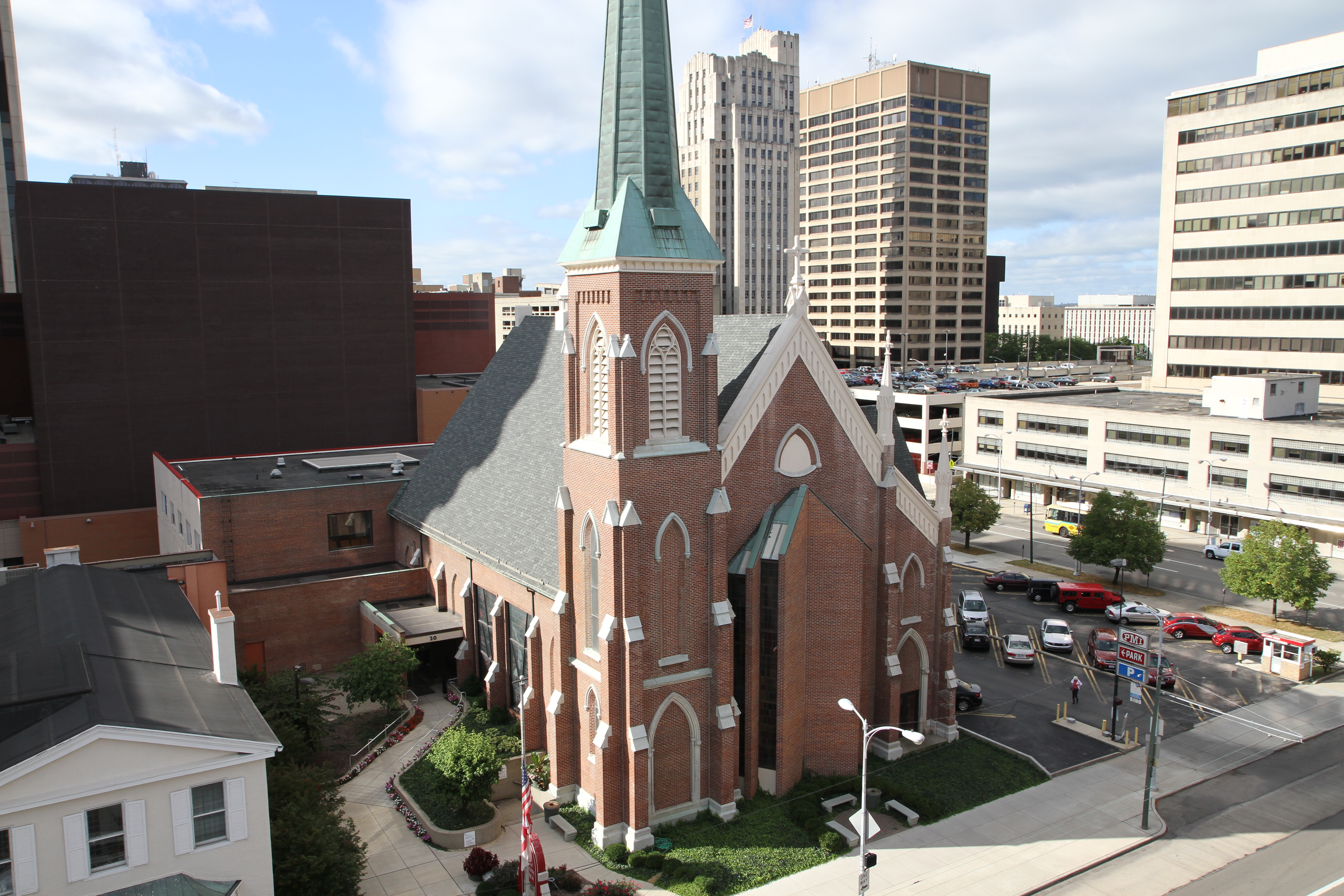
 Christ Church Blog